The Toronto Basement Flooding Subsidy for Etobicoke Homeowners
Dealing with this at your property?
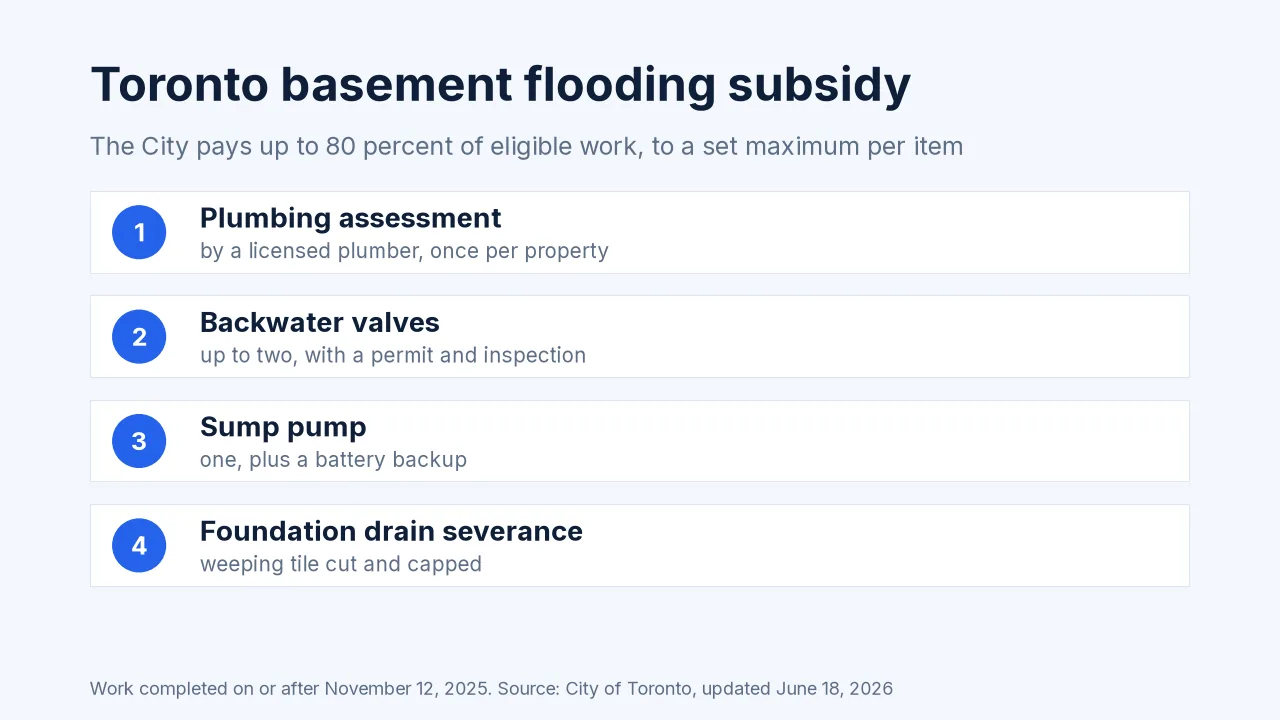
Get help nowYes. If you own a single family home, duplex, triplex or fourplex in Etobicoke, the City of Toronto will pay up to 80 percent of the cost of eligible flood protection plumbing, up to a set maximum for each item. The eligible work includes a plumbing assessment, backwater valves, a sump pump with battery backup and foundation drain severance. The rules are strict, and missing one can mean no payment.
What the program is
The Basement Flooding Protection Subsidy Program is run by the City of Toronto to help homeowners install plumbing that keeps sewer water and storm water out of their basements. It pays after the work is done: you hire a licensed plumber, pay the invoice, and then apply to the City for the subsidy. It is separate from the City's larger Basement Flooding Protection Program, which upgrades the sewers under the road.
The City expanded the subsidy for work completed on or after November 12, 2025, raising the maximums and allowing a second backwater valve. According to the City page, last updated June 18, 2026, the expanded amounts could be applied for from May 1, 2026.
What it pays for
For work completed on or after November 12, 2025, the City lists these eligible items, each with its own maximum:
- A home plumbing assessment by a licensed plumber, once per property.
- A backwater valve, up to two devices per property.
- A sump pump, one device, with an additional amount for a battery backup.
- Severing and capping the foundation drain, also called weeping tile disconnection.
The City pays up to 80 percent of the invoiced cost of each item, up to its maximum, and lists a total maximum per property. Check the City page for the current maximums before you book the work, because the City sets them and they have changed before.
What it no longer pays for
Downspout disconnection is no longer eligible for a subsidy. It still matters, though: the City requires downspouts to be disconnected, or to have an exemption, for the property to qualify at all. If your downspouts still run into the ground, deal with that first.
The subsidy also does not pay for cleanup after a flood, for drying or rebuilding a basement, or for general plumbing repairs. Those fall under your home insurance, if your policy includes the right coverage, or are paid by the owner.
Who qualifies
The applicant must be the registered owner of a single family home, duplex, triplex or fourplex in Toronto. Larger buildings and condominiums are not eligible for this program. The City also requires that the owner has no outstanding City taxes or debts, and that front yard paving complies with zoning.
Tenants cannot apply, but a landlord who owns an eligible building can. If you rent a basement apartment in Etobicoke and it has flooded, it is worth pointing your landlord to the program.
The rules that trip people up
Most refused applications come down to paperwork rather than the work itself. The City's conditions include:
- The plumbing contractor, and anyone working for them, must hold a valid City of Toronto business licence at the time of the work.
- Backwater valves need a building permit, and the installation must be inspected before the valve is covered.
- Sump pump applications need photos of the pump and the outside discharge pipe.
- The plumbing assessment must be done by a licensed plumber on the City's own form.
- Invoices must be original electronic invoices marked paid in full.
Ask your plumber about the licence and the permit before work starts, not after. Our analysis of backwater valve permits by ward shows where Toronto owners have already installed one.
How and when to apply
You apply online once the work is complete, with your invoices and supporting documents. For work completed on or after November 12, 2025, you have two years from the installation date to apply. The City says processing can take up to 10 weeks, and funding is first come, first served and depends on Council approving the budget each year. Questions go to the City at [email protected] or through 311.
What the plumbing assessment looks at
The assessment is the first step for a reason. A licensed plumber looks at how the house actually drains before anyone recommends equipment. That usually means running a camera down the main drain to check its condition and find where it connects, locating the floor drains and any cleanouts, and working out whether the foundation drains run into the sanitary sewer, the storm sewer or a sump pit. The plumber also looks at how the lot is graded, where the downspouts discharge and how deep the basement sits relative to the sewer.
The answers decide what is worth installing. A house whose main drain is cracked or full of roots may need that line repaired, which the subsidy does not pay for, before a valve makes sense. A house with foundation drains tied into the sanitary sewer may need the drains severed and a sump pump added along with the valve. The City asks for the assessment on its own form so that these findings are on record with the application.
Planning the work around a flood claim
Timing matters if the basement has just flooded. The floor is often already open after a cleanup, which is the easiest moment to install a backwater valve or sump pit, because the concrete does not have to be broken twice. Keep the restoration paperwork and the plumbing paperwork separate: the insurer deals with the damage, the City deals with the protective plumbing, and each one wants its own invoices. Ask your insurer whether installing a backwater valve affects your sewer backup coverage at renewal. If a power cut stopped the pump, see our guide to battery backup for sump pump setups for how a backup fits alongside a valve.
Is a backwater valve right for every house?
Not always. A backwater valve stops sewer water from flowing back into the house, but while it is closed, water from inside the house cannot drain out either, so fixtures should not be used during a storm. Homes with foundation drains connected to the sanitary sewer usually need the drains severed and a sump pump added at the same time, or water around the foundation has nowhere to go when the valve closes. That is why the City starts with an assessment by a licensed plumber.
The City's study of basement flooding in Etobicoke covers 17 areas, listed in the guide to where Etobicoke floods and why. Living in a study area does not change your eligibility, but it is a good reason to take the subsidy seriously. Homeowners just north of Toronto should read how Markham flooding programs and the City of Markham rebate differ from Toronto's.
If the basement has already flooded
Deal with the water first and the protection second. Call 311 if water came up a drain, photograph everything, and open a claim with your insurer. Contaminated material has to be removed and the structure cleaned and dried before anything is rebuilt, and that is the right moment to have a plumber install a backwater valve or sump pump, while the floor and walls are already open.
FirstLine Restoration handles the cleanup side, from extraction and drying to the rebuild: see basement flooding cleanup in Etobicoke and sewer backup cleanup in Etobicoke, or water damage restoration in Etobicoke for leaks and condo water. The plumbing itself is done by a licensed plumber who meets the City's licence rules.
Sources
City of Toronto, Basement Flooding Protection Subsidy Program, updated June 18, 2026; City of Toronto, Basement Flooding Protection Program map, updated October 2, 2026; City of Toronto basement flooding guidance, updated June 30, 2026. Checked November 3, 2026. Program rules and amounts are set by the City and can change.
Frequently asked questions
How much does the City of Toronto pay toward a backwater valve?
The City pays up to 80 percent of the invoiced cost of a backwater valve, up to a maximum it sets for each device, and since November 12, 2025 it allows up to two valves per property. Because the City sets and changes the maximums, check the current figure on the City subsidy page before you book the work, and keep the permit and inspection records.
Can I apply for the subsidy if I own a condo in Etobicoke?
No. The Basement Flooding Protection Subsidy Program is for registered owners of single family homes, duplexes, triplexes and fourplexes. Condominium units and larger buildings are not eligible. If your condominium has flooding problems, raise them with the board and property manager, because the corporation is generally responsible for the common elements, including the building's drains, sump pits and connections to the City sewer.
Do I need a permit for a backwater valve in Toronto?
Yes. The City requires a building permit for a backwater valve, and the installation has to be inspected before the valve is covered over. Without the permit and a passed inspection, the subsidy application will not be paid. A licensed plumber who does this work regularly will usually pull the permit and book the inspection as part of the job. Ask for both in writing before work starts.
How long do I have to apply after the work is done?
For work completed on or after November 12, 2025, the City allows two years from the installation date to apply. Work completed earlier had a one year limit. You apply online with original electronic invoices marked paid in full, and the City says processing can take up to 10 weeks, with funding granted first come, first served, so applying soon after the work is safer.
Does the subsidy pay for cleanup after a basement flood?
No. The subsidy pays only toward eligible protective plumbing such as a plumbing assessment, backwater valves, a sump pump with battery backup and foundation drain severance. Cleanup, drying and rebuilding after a flood are paid through your home insurance if your policy includes the right coverage, or by the owner. Sewer backup coverage is optional in Ontario, so check your policy before you need it.
Water, fire, or mould emergency in the GTA?
45-minute emergency response. Documented, insurance-ready work. We answer 24/7/365.
Call (416) 900-3508 Send the details insteadGet help with your property
Calling is fastest for an active emergency. Send the details and our team follows up right away.